
| Go Back to Webite Home Page | | | Go Back to Start of Session 1 | | | Go Back to Previous Section |
Session 1 - Section E: Coping Mechanisms and Boundary Conditions
In this section we are going to have a look at ways humans go about managing to live with the negative beliefs that they don't know they are carrying in their subconscious mind, and about boundary conditions, which are the conscious limits of our thinking.
Coping Mechanisms
Sometimes significant events - or the defining moments that form our negative beliefs - are too painful and humans develop coping mechanisms to protect themselves from unpleasant emotions.
Coping mechanisms are largely unconscious actions or reactions, and they work through self-deception.
Following is a list of Coping Mechanisms, as defined in Wayne Weiten's book titled 'Psychology - Themes And Variations' (Brooks/Cole Publishing Company, 1989). Can you recognise any of these coping mechanisms in yourself or others?
- Rationalisation
- involves creating false but plausable excuses to justify unacceptable behaviour - eg. after cheating someone in a business transaction, the unscrupulous salesman might reduce his guilt by rationalising that "Everyone does it".
- Projection
- involves attributing your own thoughts, feelings or motives onto another - eg a man's lust for a co-worker makes him feel guilty, so he attributes the latent sexual tension between the two of them to the other person's desire to seduce him
- Displacement
- involves diverting emotional feelings (usually anger) from their original source to a substitute target - eg a woman who was given a hard time at work, when she gets home, slams the door, kicks the dog and screams at her spouse (who are irrelevant targets)
- Repression
- involves keeping distressing thoughts and feelings buried in the unconscious - eg a lady who suffered a great trauma as a little girl might supress these memories and not have any memories of them as an adult
- Reaction Formation
- involves behaving in a way that is exactly the opposite of one's true feelings - eg. guilt about sexual desires - a man who loudly ridicules homosexuals because he is defending against his own latent homosexual tendencies
- Regression
- involves a reversion to immature patterns of behaviour - eg. a fired business executive having difficulty finding a new job might start making ridiculous statements, childishly bragging about his incomparable talents and achievements
- Identification
- involves bolstering self-esteem by forming an imaginary or real alliance with some person or group - eg a young person shoring up precarious feelings of self-worth by identifying with a rock-star hero, a movie star or a famous athlete
We all use coping mechanisms to some degree. They only become problematic when depended upon excessively! You can see now that holding negative beliefs in our unconscious mind can have sometimes quite dramatic effects on our behaviour, and how releasing negative thoughts can make quite a profound difference!
Boundary Conditions
Boundary conditions are at the conscious limits of our thinking (the edge of our comfort zone). Every single result we get in our lives is based on what we know. For example, we may make $50,000 a year. That is because we know how to make $50,000 a year. If we knew how to make $150,000 a year we would! But we don't, because we don't yet know.
Boundary conditions are conditions we put upon ourselves, due to our negative beliefs. An example of this is 'I can't do that job because I'm no good at public speaking'. Generally if our sentences start with 'I can't', 'I never', 'I should', 'If only', 'I shouldn't', 'I always', 'I won't', 'Everybody always', 'I have to' or 'I need', then we are putting conditions upon ourselves.
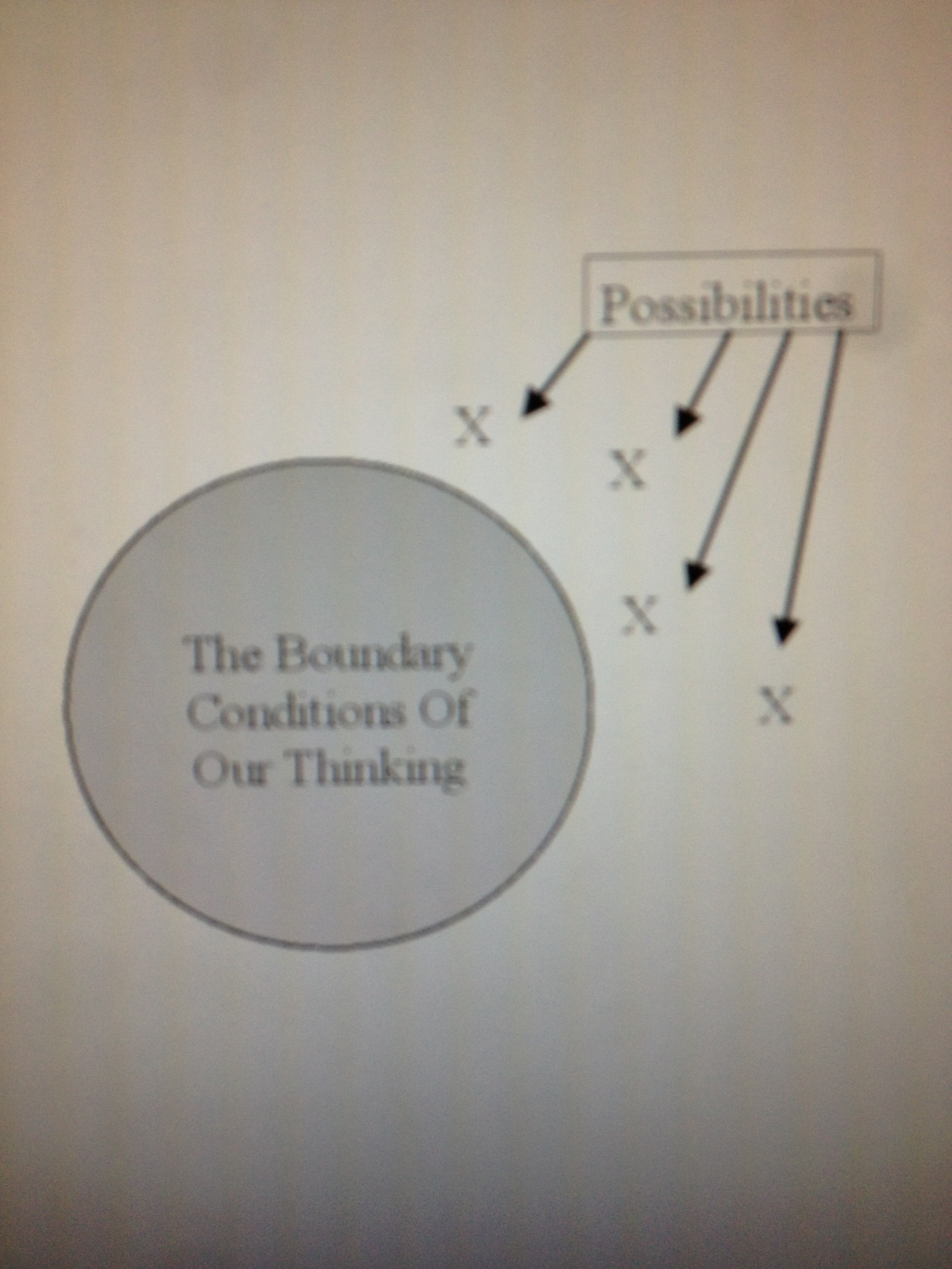
Figure 1E.1 The boundary of our thinking - the outside edge of the grey section represents the conscious limits of our thinking. Note the possibilities are outside of what we currently know.
Most people's boundary conditions are due to:
- Trust/intimacy issues
- A fear of not being loved
- A fear of not being enough
- A fear of not belonging
- A desire to avoid responsibility
- A desire to feel safe and secure (flight or fight)
- A fear of not being in control
- A fear of failure
- A fear of success
- A desire for certainty
We don't know, because it is outside what we know. It is outside the boundary of our thinking. To create transformation, we have to go beyond what we know, to the unknown.
The crosses represent solutions to our problems. Our problems may seem big and unmanageable because any solutions are beyond our self-imposed boundaries, beyond our realm of possibility. We can't move solutions inside the boundary of our thinking. Instead we must EXPAND our thinking.
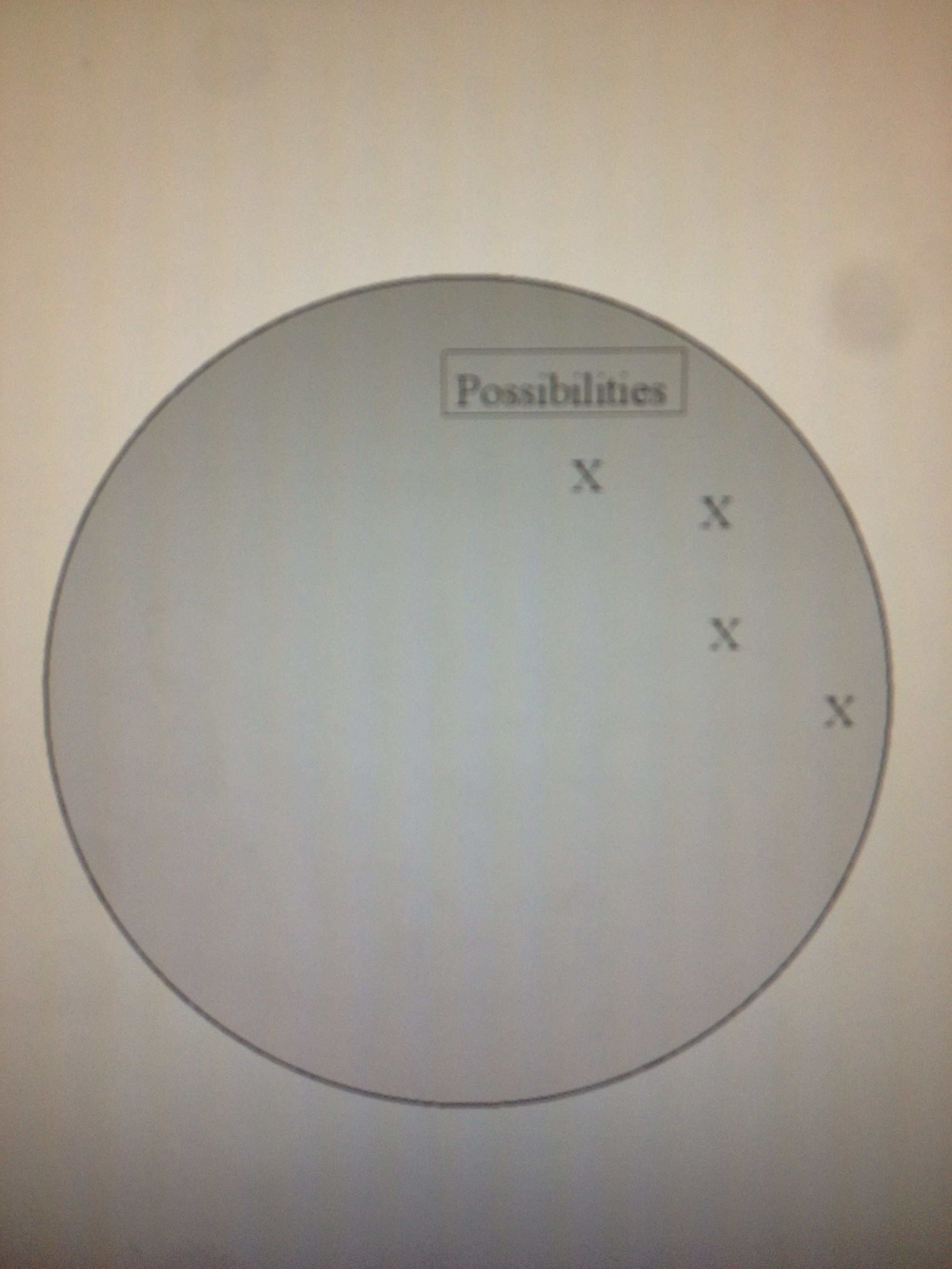
Figure 1E.2 The Boundary of our thinking has been expanded. Note what was outside our realm of possibility is now inside them.
Once we expand our thinking, our problems become possible, and manageable, instead of remaining huge and unsurmountable.
But how do we expand our thinking? By listening to our inner voice, identifying our negative beliefs and gaining a conscious awareness of them, you expand the boundaries of your thinking. This is why it is so important to be able to listen to your inner voice!
Congratulations! You have now finished Session 1: How Does The Human Mind Really Work? Well done!
Now you have an understanding of the workings of the human mind, the next step is to discover 'who' it is that we will be talking to exactly when we talk to our inner voice...