Can you guess which corner of the world each mandala came from? Hover over each mandala image for the answer.
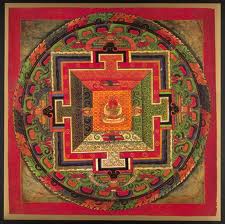 This mandala comes from Russia.
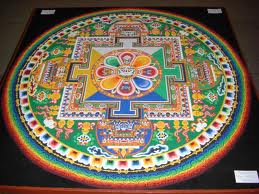 This mandala comes from Tibet.
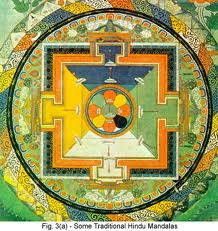 This mandala comes from the Navajo Indians.

| Go Back to Webite Home Page | | | Go Back to Start of Session 1 | | | Go Back to Previous Section |
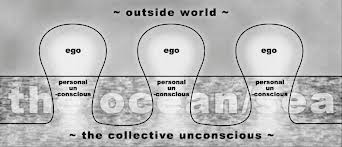
Like Freud, Carl Gustav Jung (1875 - 1961) the famous Swiss psychotherapist and psychiatrist, believed in the existence of the unconscious mind, and the way it determined personality. However, he went further, and theorised (and later proved) the concept that the unconscious mind actually consisted of two layers. He called these the Personal Unconscious and the Collective Unconscious.
This layer is essentially the same as Freud's version of the unconscious mind, as was explained earlier in Section A: Levels of Awareness. The Personal Unconscious houses material that is not within one's conscious awareness because it has been repressed or forgotten.
In addition, Jung theorised the existence of a deeper layer of the unconscious mind, which exists in the deepest reaches of our awareness. He believed this deeper layer was a storehouse of latent memory traces inherited from our ancestral past, which he called archetypes. He believed that we share our collective unconscious with the entire human race! It contains, he said, the "whole spiritual heritage of mankind's evolution, born anew in the brain structure of every individual" (Jung quoted in Campbell, 1971, p.45).
As evidence of the existence of the collective unconscious, Jung pointed to the remarkable resemblances amongst symbols from very disparate cultures, such as the mandalas shown below (which, by the way, were designed WAY before the existence of the telephone or the advent of overseas travel!)
Can you guess which corner of the world each mandala came from? Hover over each mandala image for the answer.
This mandala comes from Russia.
This mandala comes from Tibet.
This mandala comes from the Navajo Indians.
Figure 1C.2 Mandalas from very disparate cultures
So, information does not only move one way through the threshold, from the conscious to the unconscious, but it actually moves both ways through the threshold, from the collective (and personal) unconscious, into the conscious as well. This is important to know for when we get to Session 2: Who Are We Talking To Exactly?